
 How To Grow Peas
Peas aren’t only delicious, they are extremely easy to grow and care for. Unlike a lot of veggies, peas like to be planted close together as they help each other “stand up”. When growing peas, remember that they tend to prefer cooler weather, so early Spring is a good time to start. You usually can plant peas until early summer, but hold off when temps are 75º and above, of course when you’re gardening in the Northwest, that doesn’t happen as often as we’d like.
When the weather cools, you can usually squeeze in another crop and plant peas in early October and hopefully have a crop ready by late November.
Planting Peas
Before planting peas, mix in a fair amount of compost and rotted manure. This will most likely be all the food your peas will need for their entire lifespan! Adding fertilizer usually isn’t necessary, though it doesn’t hurt to add a small amount of organic fertilizer.
It really helps to plant peas around some kind of trellis, otherwise they will fall over…trust me on this. A tripod made out of wood, hog wire, anything you can make or find – as peas can grow up to 5′ tall!
Once your trellis is in place, plant your peas around the outside (and inside if you’d like) about 1″-2″ apart and 1″ deep. Give them a good watering and you’re on your way to growing peas!
 Caring For Peas
The wonderful thing about growing peas is they have the wonderful ability to take nitrogen right from the air, so additional fertilizer is usually not necessary. I wish all plants were like this! Just keep the soil moist down to an inch or so, but not over-watered and they should end up in the kitchen in no time at all!
As I mentioned, it’s best to give the peas something to grow on. Trellising works well, or you can even have them grow “up” other plants such as corn or sunflowers! As your peas start to get 6″ tall you can start training them up whatever your using by gently weaving them. Just be careful, if you don’t want to break their tiny little stems. No good for the peas, no good for you. Just be careful and they’ll reward you for it.
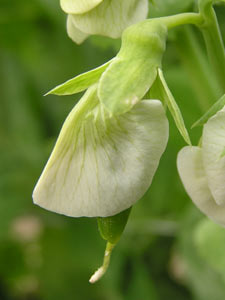
Word of warning, deer LOVE TO EAT PEAS, especially the tiny white flowers – which will eventually turn into the pods. So if you live in a deer infested area like we do, I’m assuming (or hoping) that you have deer prevention in place. I prefer the good old fence method. Otherwise all of your hard work will go to waste. You’ll keep the deer happy though.
I should write an article on how to raise deer, simply plant peas and you’ll have your own patch of them!
 Harvesting Peas
The best time to pick peas confuses some people. You want to pick them before they become TOO ripe, otherwise they become starchy and loose their sweetness. In other words, pick when the peas are fully formed, but before the pods start to bulge. Unless you want to save seed for next year, then you can let ’em go all the way!
Taste testing is your best friend here, have fun with it!
It helps if you hold the stem with one hand and pluck away with the other, as you don’t want to break or bend the rest of the plant.
Peas Pests
Aphids, Tarnished Plant Bugs
Peas Diseases
Enation, Downy Mildew, Damping Off Disease
Peas Friends
Peas will happily grow with carrots, turnips, radishes, cucumbers, beans and potatoes.
Peas Foes
Peas do not grow well with onions, garlic, shallots or leeks.
Peas Varieties
Oregon Sugar Pod, Sugar Daddy, Super Sugar Snap
Tips For Growing Peas
- When growing peas, keep them moist but not over-watered.
- Fertilizer is usually not necessary.
- You can soak the seeds over night before planting for speedy germination.
- If you plant peas around your corn, they will grow right up the stalk!

